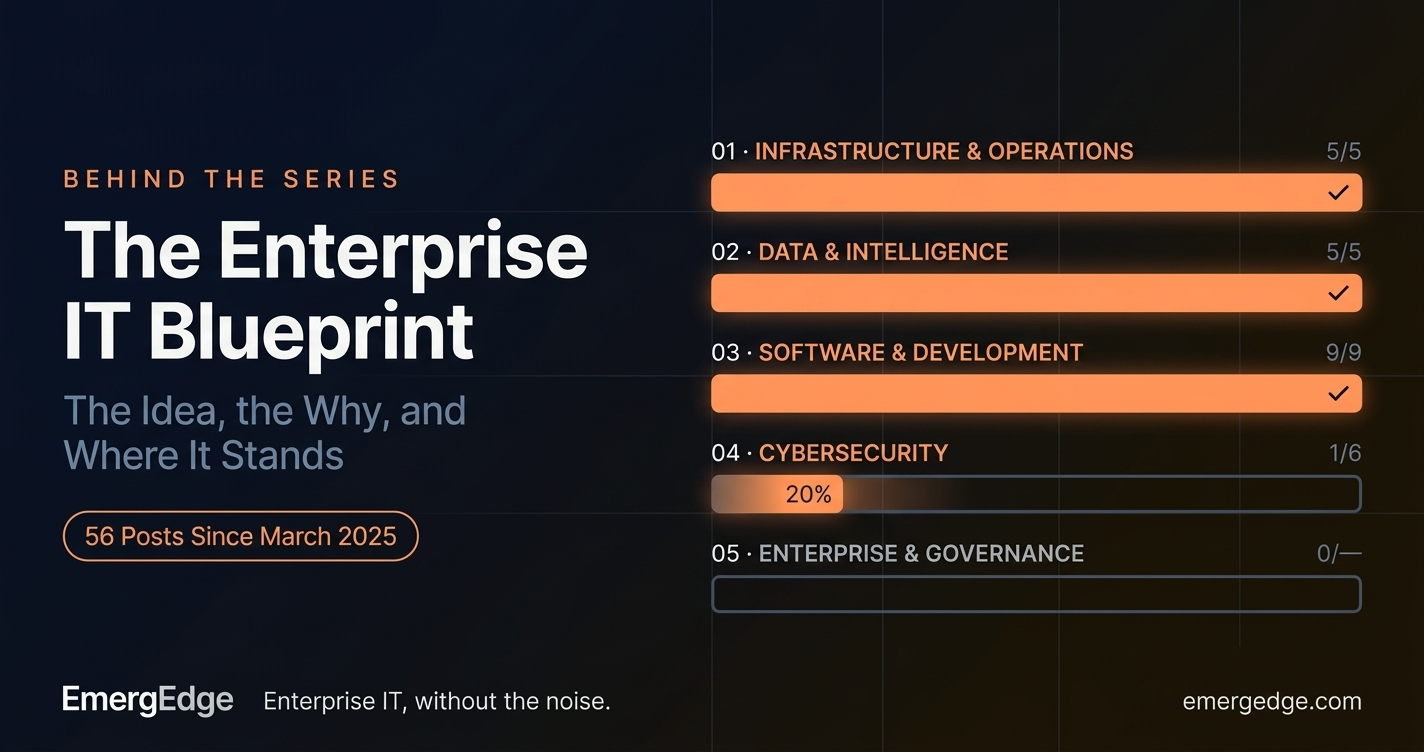
Every other category in this series has a version of the same underlying promise: do this well, and things get measurably better. Infrastructure that scales. Data that's trustworthy. Software that ships faster. Progress is visible, and it compounds.
Cybersecurity doesn't work that way. Do it well, and — on your best days — nothing happens. No breach, no headline, no incident report. The entire discipline is built around proving a negative, to a board that wants a number, in a budget cycle that treats the absence of a bad outcome as evidence you overspent last year. That asymmetry is why this category sits apart from the three that came before it in this series, and why it opens Phase 4.
Why This Category Is Structurally Harder
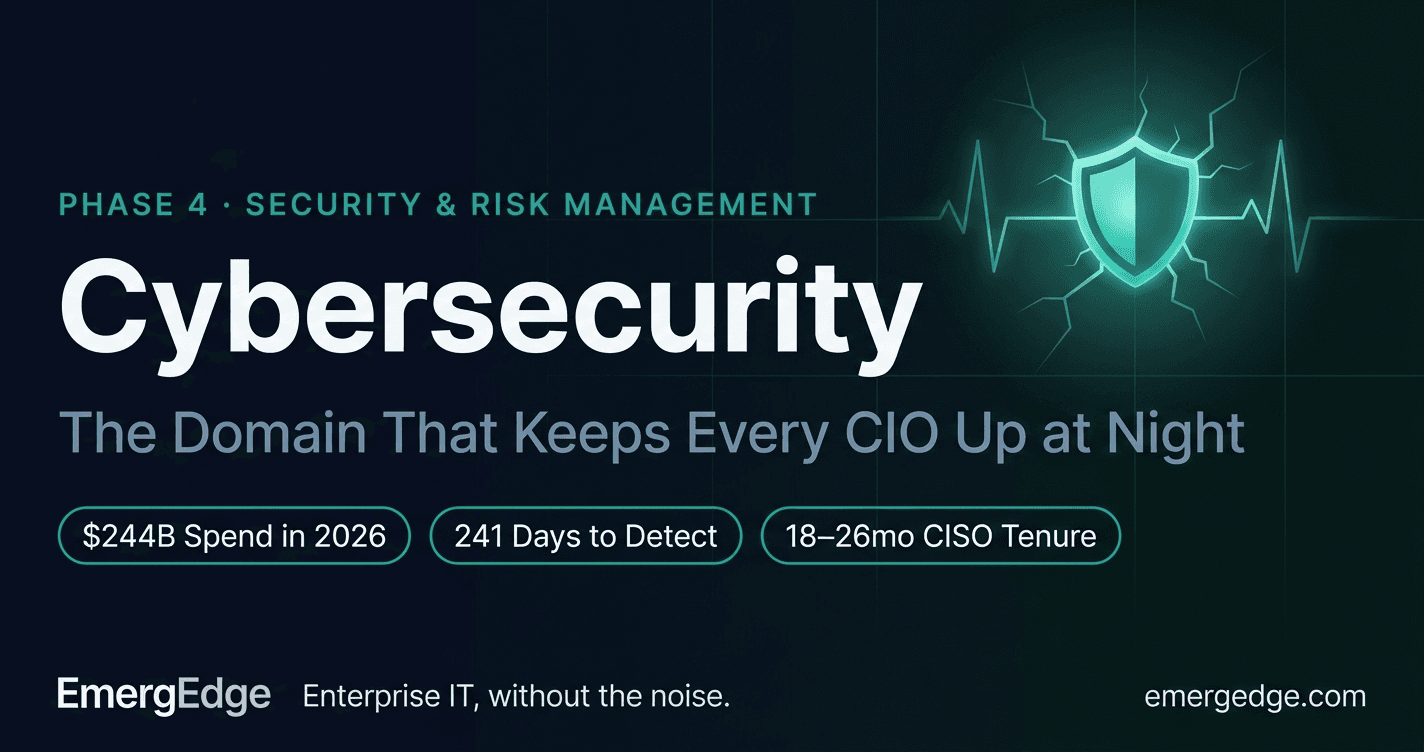
The scale of investment tells part of the story. Global information security spending is projected to reach $244.2 billion in 2026, up 13.3% — with cloud security posture management alone growing 33.4% as organisations race to cover exposure that didn't exist five years ago. That's not discretionary spending growth. It's an admission that the attack surface is expanding faster than most security programmes can cover it.
The outcomes tell the rest of it. The global average cost of a data breach was $4.44 million in the most recent measurement — and in the United States specifically, that figure is now $10.22 million, a record high. The mean time to identify and contain a breach sits at 241 days: 181 days before anyone even knows it happened, another 60 to actually contain it. Breaches with a lifecycle under 200 days average $3.87 million; past 200 days, that climbs to $5.01 million. Every day of delay has a price, and most organisations are paying nearly eight months of it before they've even finished the "identify" step.
None of that is a technology gap. Organisations extensively using AI and automation in their security operations save $1.9 million per breach on average — the tools to close the detection gap largely exist. The harder problem is structural: security has to be right every single time, an attacker only has to be right once, and the people accountable for that asymmetry are burning out faster than almost any other role in the enterprise. Average CISO tenure now sits between 18 and 26 months, well below the roughly five-year average across the rest of the C-suite. Sixty-three to seventy-six percent report experiencing or witnessing burnout in the past year, depending on which survey you read. At the same time, board-level accountability has tightened sharply — 82% of CISOs now report directly to the CEO, up from 47% just a few years earlier, and the overwhelming majority now brief the board directly rather than routing updates through the CIO.
Higher visibility, shorter tenure, harder-to-prove success. That combination is what makes this the category CIOs actually lose sleep over — not because the other categories don't matter, but because this is the one where a single bad month can undo years of otherwise solid work.
The Five Posts That Map This Category
Phase 4 covers five domains. Together they represent the security capability a modern enterprise actually needs — not a checklist of point tools, but the six architectural layers that have to work as one coordinated system.
Zero Trust Architecture
The foundational shift this entire category is built on — from a perimeter that assumed trust once you were inside it, to a model where every request is authenticated and authorised regardless of network location. Post 4.1, already published, covers the six pillars, why adoption is outpacing maturity by a wide margin, and the gap between organisations that have implemented the label versus the actual architecture.
Network Security & SASE
How network security itself had to be rebuilt once "the network" stopped being a single defensible perimeter — the shift toward Secure Access Service Edge, and what it means to secure a workforce and workload footprint that no longer sits inside four walls. Post 4.2.
Cloud Security & CNAPP
Protecting infrastructure that most security teams can't fully see — the consolidation of cloud security posture management, workload protection, and entitlement management into a single Cloud-Native Application Protection Platform category, and why that consolidation itself has become the market's fastest-growing segment. Post 4.3.
Security Operations & SIEM/XDR
The detection and response layer — how modern SOCs correlate signal across an estate too large for any human team to monitor manually, and what separates a SIEM deployment that actually shortens the 241-day detection window from one that just generates more alerts nobody has time to read. Post 4.4.
MQ Spotlight — Endpoint Security
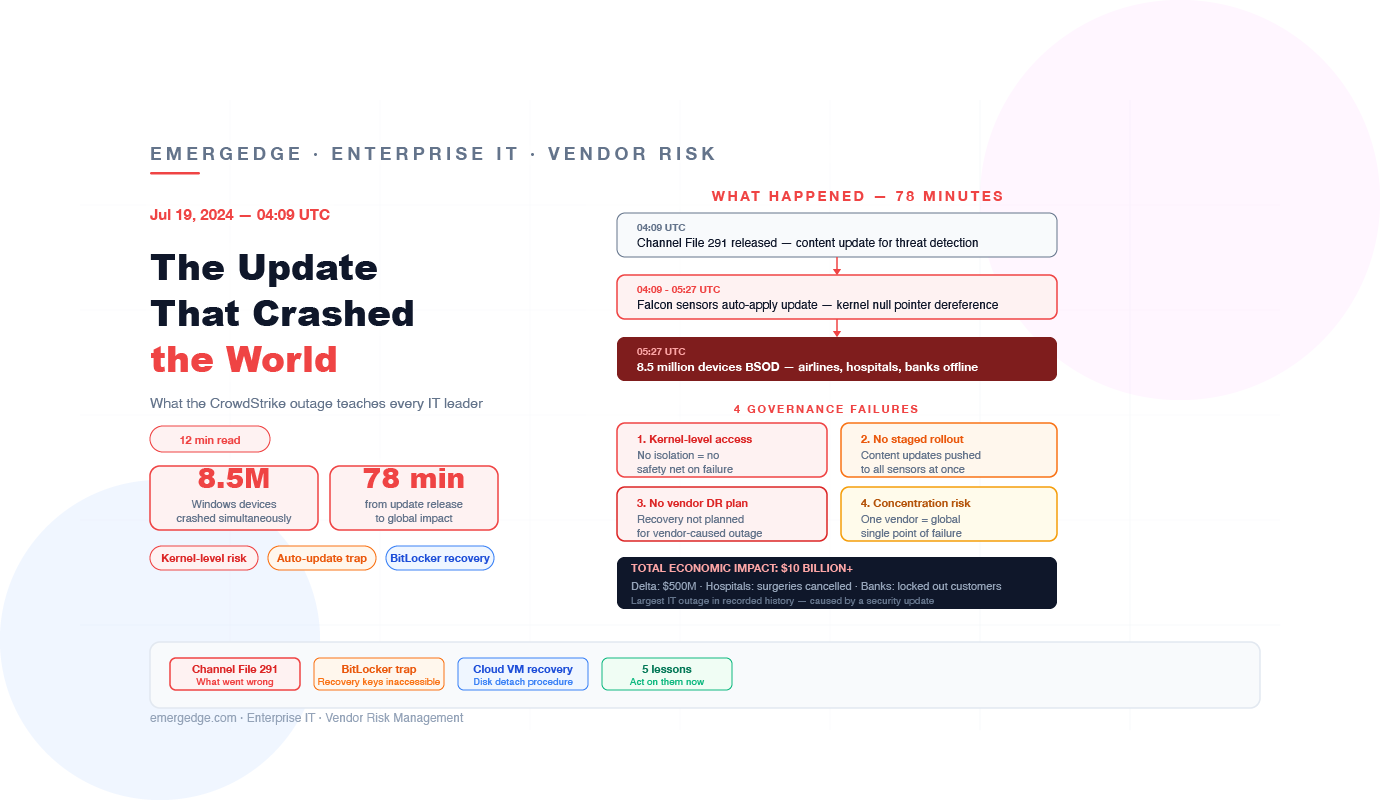
A direct comparison of the platforms competing for the layer closest to the actual point of compromise: CrowdStrike, SentinelOne, and Microsoft Defender, evaluated on the dimensions that decide a real enterprise procurement rather than an analyst quadrant. Post 4.5.
What This Category Means for IT Leaders
Mastering this category doesn't look like mastering the previous three. There's no equivalent of "deploy more often" or "close the technical debt ratio" — the win condition is closer to nothing happened, and here's the evidence that's not luck.
Three questions worth asking of your own organisation right now:
1. If you were breached today, would you find out in days, or would you be one of the organisations still averaging 241 days to identify and contain? That number hasn't moved much in years despite record security spending — which means for most organisations, detection capability is not keeping pace with either the threat or the investment.
2. Is your security architecture actually Zero Trust, or is it a perimeter model with MFA layered on top and a Zero Trust label attached to the budget line? The gap between the two is the difference between the 60% of large enterprises with a "programme" and the fewer than 10% who've reached genuine advanced maturity.
3. Is your CISO positioned to succeed, or are you quietly building the conditions for an 18-month tenure and a repeat of this same conversation with their replacement? Board visibility has increased faster than the support structure around the role has — reporting directly to the CEO is not the same thing as having the authority, budget, and organisational backing the job actually requires.
The five posts in this category are built to answer those questions with architecture, not just awareness — starting from the foundation Zero Trust already laid, and working outward through network, cloud, operations, and the endpoint layer where most of it ultimately gets tested.
Sources: Gartner cybersecurity spending forecast, 2026, IBM Cost of a Data Breach Report, 2025, IANS Research / Sophos, CISO tenure and reporting lines, 2026.