In a surprising move, Microsoft has decided to retire Project Natick — its ambitious underwater data center initiative. Despite its promising performance and environmental benefits, the project will not see a commercial rollout. This post explores the history of Project Natick, its outcomes, and why Microsoft ultimately chose to move on.
Introduction
In 2015, Microsoft launched one of the most daring infrastructure experiments in data center history: Project Natick, an underwater data center initiative designed to test whether data centers submerged in the ocean could be more sustainable, efficient, and reliable than their land-based counterparts. Eight years later, the project has officially been shelved — despite proving successful on many fronts.
So what went right — and why did Microsoft walk away?
The History of Project Natick
Project Natick began as a response to multiple challenges:
- The rising demand for low-latency data delivery
- Growing concerns around energy usage and sustainability in data centers
- The desire to deploy data centers closer to coastal population hubs
Phase 1 — 2015
Microsoft submerged a prototype off the coast of California. The capsule operated for 105 days and proved the feasibility of submersion without disruption.
Phase 2 — 2018 to 2020
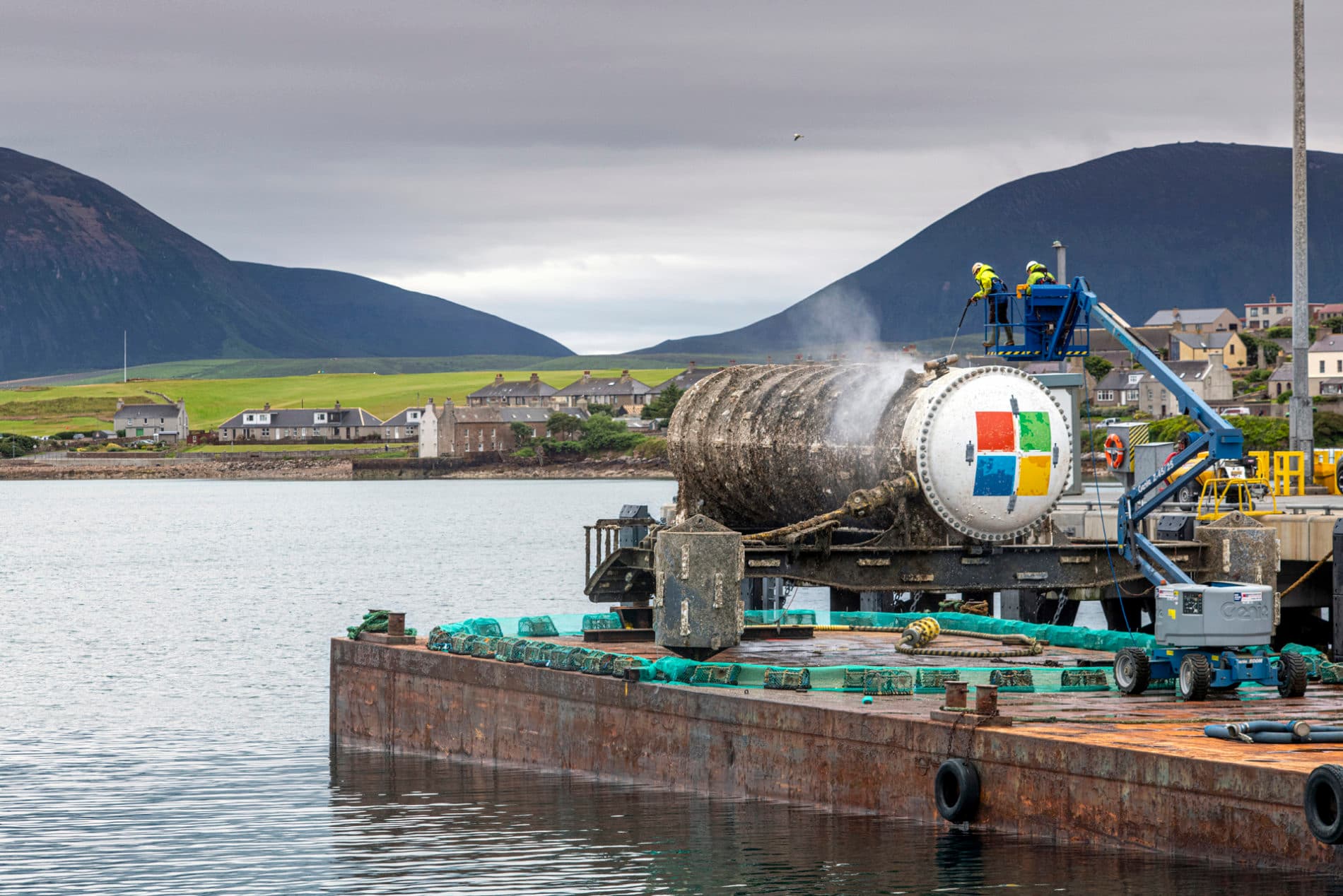
A larger vessel was placed 117 feet deep off the coast of the Orkney Islands, Scotland. This version contained 864 servers and 27.6 petabytes of storage, fully powered by renewable energy from wind and tidal sources. The capsule operated for over two years without issues, outperforming traditional data centers in reliability and sustainability.
Outcomes of the Project
Project Natick was not a failed experiment — in fact, it was a remarkable success.
Higher Reliability
Microsoft reported that the underwater data center had one-eighth the failure rate of its land-based counterparts. Reduced exposure to human error, corrosion, and temperature fluctuation contributed to this exceptional reliability.
Environmental Efficiency
- Powered entirely by renewable energy
- Naturally cooled by seawater, eliminating the need for traditional HVAC systems
- Reduced carbon footprint and energy costs compared to conventional facilities
Modular and Rapid Deployment
- Data centers could be manufactured, shipped, and deployed within 90 days
- Ideal for regions with limited space or infrastructure
Proximity to Coastal Populations
Almost 50% of the global population lives near the coast. Underwater data centers could reduce latency and improve connectivity for the majority of internet users worldwide.
So Why Did Microsoft Abandon It?
Despite its many advantages, Microsoft quietly announced it would not pursue commercial-scale underwater data centers.
Scalability Limitations
The pods had a fixed capacity and were not easily upgradable or serviceable. Scaling would require deploying many units in marine environments, adding significant logistical and environmental complexity.
Maintenance Challenges
Physical repairs meant bringing the entire unit back to the surface. Long-term maintenance and lifecycle planning were far less flexible than with land-based facilities.
Regulatory and Environmental Hurdles
Deploying in coastal waters requires governmental and environmental permissions. Potential ecological concerns and jurisdictional red tape presented serious barriers to global rollout.
Cloud Strategy Shift
Microsoft is doubling down on AI, hybrid cloud, and edge computing — all of which favour more dynamic, accessible infrastructure. Underwater pods, while innovative, do not align well with the rapid scaling needs of AI model training and inference workloads.
Conclusion
Project Natick may be over, but it left a lasting impact. It proved that sustainable, resilient, and low-maintenance data centers are possible — even underwater. It offered valuable insight into how modular design, renewable power, and remote operations can shape the future of infrastructure.
As Microsoft pivots toward AI and global edge computing, Natick will be remembered as an inspiring leap toward sustainable cloud infrastructure. Sometimes even the most successful pilots do not make it to production — but their lessons always carry forward.